Pressure loss in a butt fusion machine is almost always a hydraulic fault. The most common causes are low or contaminated oil, air trapped in the circuit, leaking hoses or quick-couplers, worn cylinder seals, and an incorrectly set relief valve. A gauge that reads low can also come from a drifted gauge or a faulty pressure sensor rather than a real leak. Work through the ten checks below in order; each step isolates one layer of the circuit so the fault is found by elimination, not guesswork.
Symptom Check: Match the Failure to the Likely Cause
Before opening any component, record what the machine is actually doing. The symptom almost always narrows the search to one or two layers of the hydraulic circuit.
| Symptom | What you see | Most likely cause | First check |
|---|
| Pressure cannot build | Gauge stays near zero while the pump runs | Air in the circuit, relief valve open, or low oil | Oil level and air bleed |
| Pressure drops on hold | Gauge creeps down with no carriage movement | External leak or cylinder bypass | Isolate hoses and couplers |
| Carriage moves slowly | Carriage lags or stalls under load | Low flow, pump wear, cold oil, or air | Oil temperature and pump condition |
| Gauge fluctuates | Needle jumps or vibrates | Air entrainment or pump cavitation | Bleed air and check suction line |
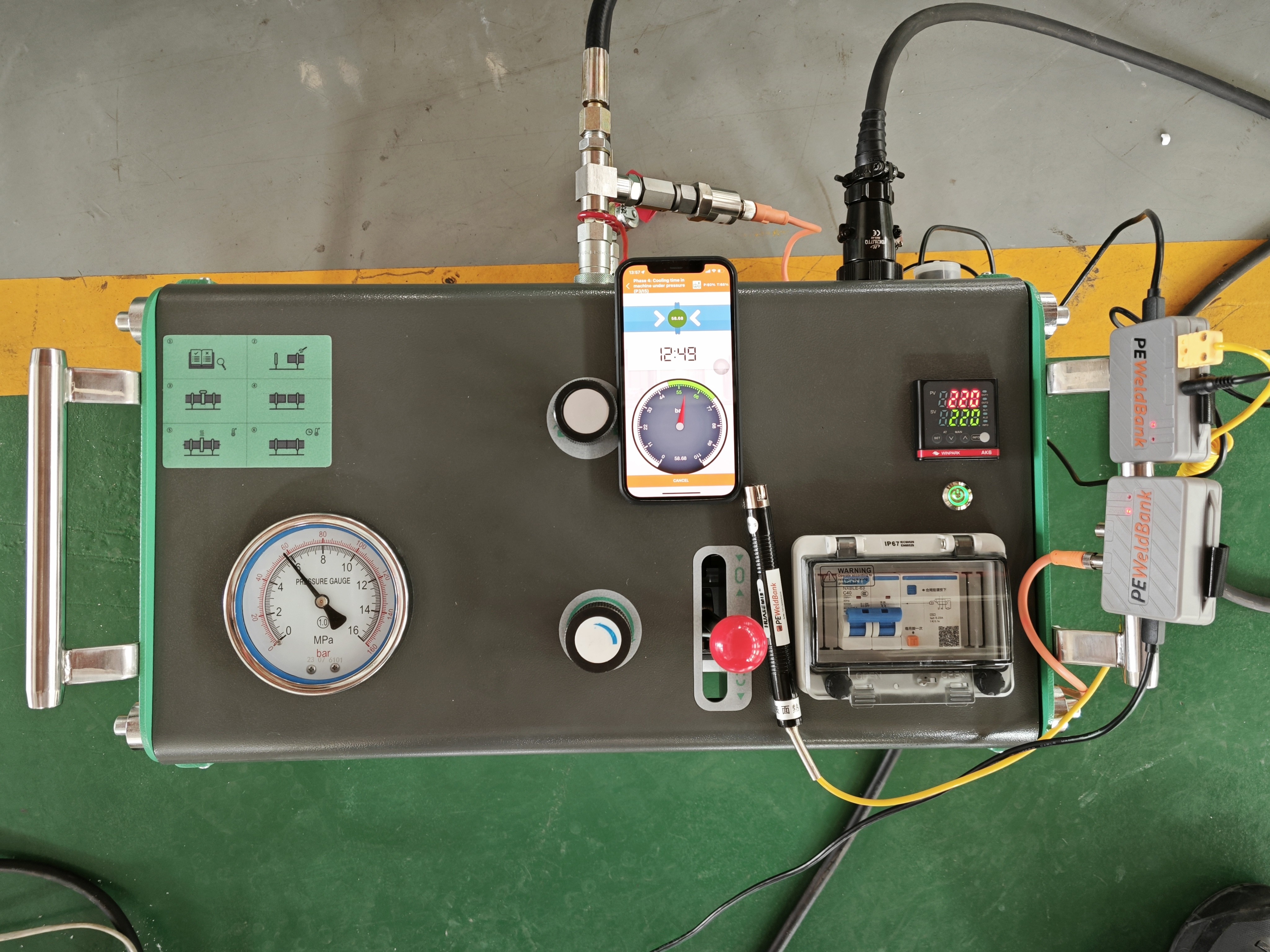
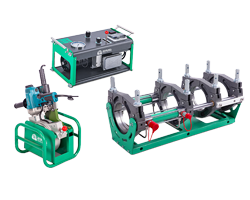
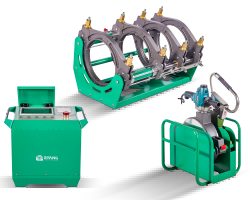
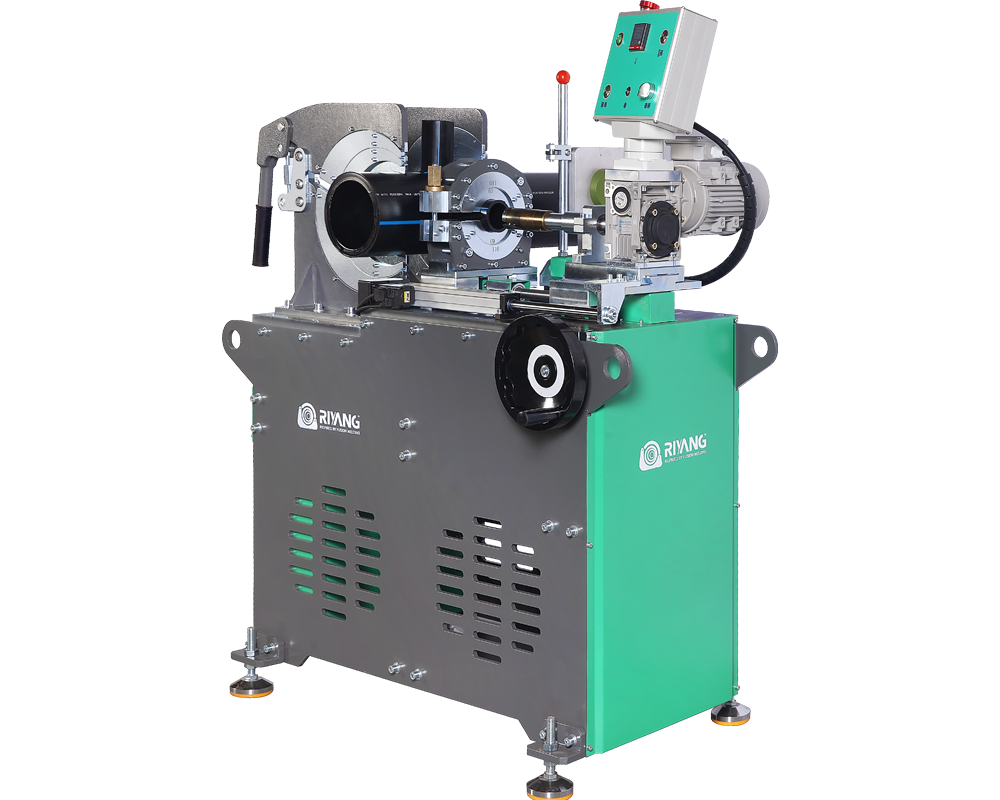
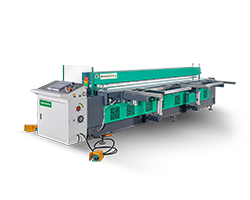
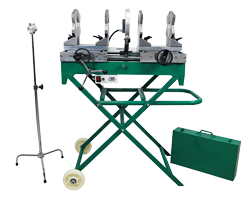
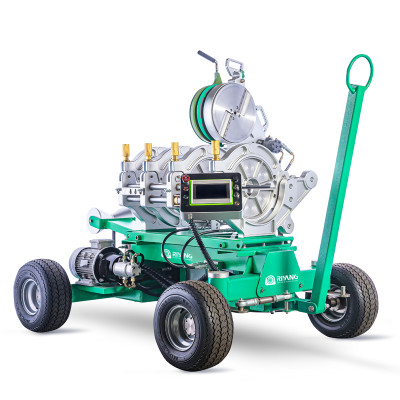
A hydraulic butt fusion machine under inspection in the workshop.
1. Oil Level and Oil Condition
A low reservoir lets the pump draw air instead of fluid; the first sign is a pressure reading that will not build or hold. Check the sight glass or dipstick first, and top up only with the grade specified in the manual.
Oil condition matters as much as oil quantity. Milky or cloudy fluid indicates water contamination, while dark, sludgy fluid points to oxidation and accumulated particulates. Contaminated oil accelerates wear on seals and the pump and can cause the exact "pressure drop" symptom you are chasing.
Note the distinction: welding standards such as ISO 21307 and DVS 2207 govern the fusion process parameters and joint procedure, but the hydraulic oil grade (commonly an ISO VG 46 anti-wear fluid) is a manufacturer recommendation for the specific machine. Always follow your machine's manual rather than a generic value.
2. Air in the Hydraulic Circuit
Air is compressible, so trapped air makes the system feel spongy and prevents a clean pressure build. Signs include a fluttering gauge, a jerking carriage, and pump whine from cavitation.
To clear it, cycle the cylinder through its full stroke several times to push air back to the tank, check the suction hose for cracks or loose clamps, and confirm the tank breather is not clogged. Re-check the oil level after bleeding, because low level is the most common way air enters in the first place.
3. Hose and Quick-Coupler Leakage
External leaks are the easiest to find: look for wet fittings, oil residue, or drips along hoses and around quick-couplers. Quick-coupler O-rings are a frequent failure point because they are repeatedly connected and disconnected in dirty conditions and slowly lose their seal.
To isolate, clamp the hoses to the carriage. If the gauge now holds, the leak is downstream in the couplers or cylinder; if it still falls, the leak is inside the power unit. Replacing quick-coupler O-rings is the most common field fix for a slow bleed.
4. Worn Seals or Cylinder Bypass
Internal bypass happens when fluid leaks past a worn piston seal inside the cylinder, so pressure bleeds away with no visible oil on the outside. The classic clue is a carriage that slowly drifts under load while the gauge drops, even though every hose and fitting is dry.
Confirm it by isolating the cylinder and watching whether pressure still decays, or by checking for carriage creep against a blocked load. Worn rod seals and a scored cylinder bore produce the same symptom and require a seal-kit replacement or workshop service. A correctly maintained butt fusion welding machine should hold fusion pressure steadily through the cooling phase; if it cannot, the seal set is the prime suspect.
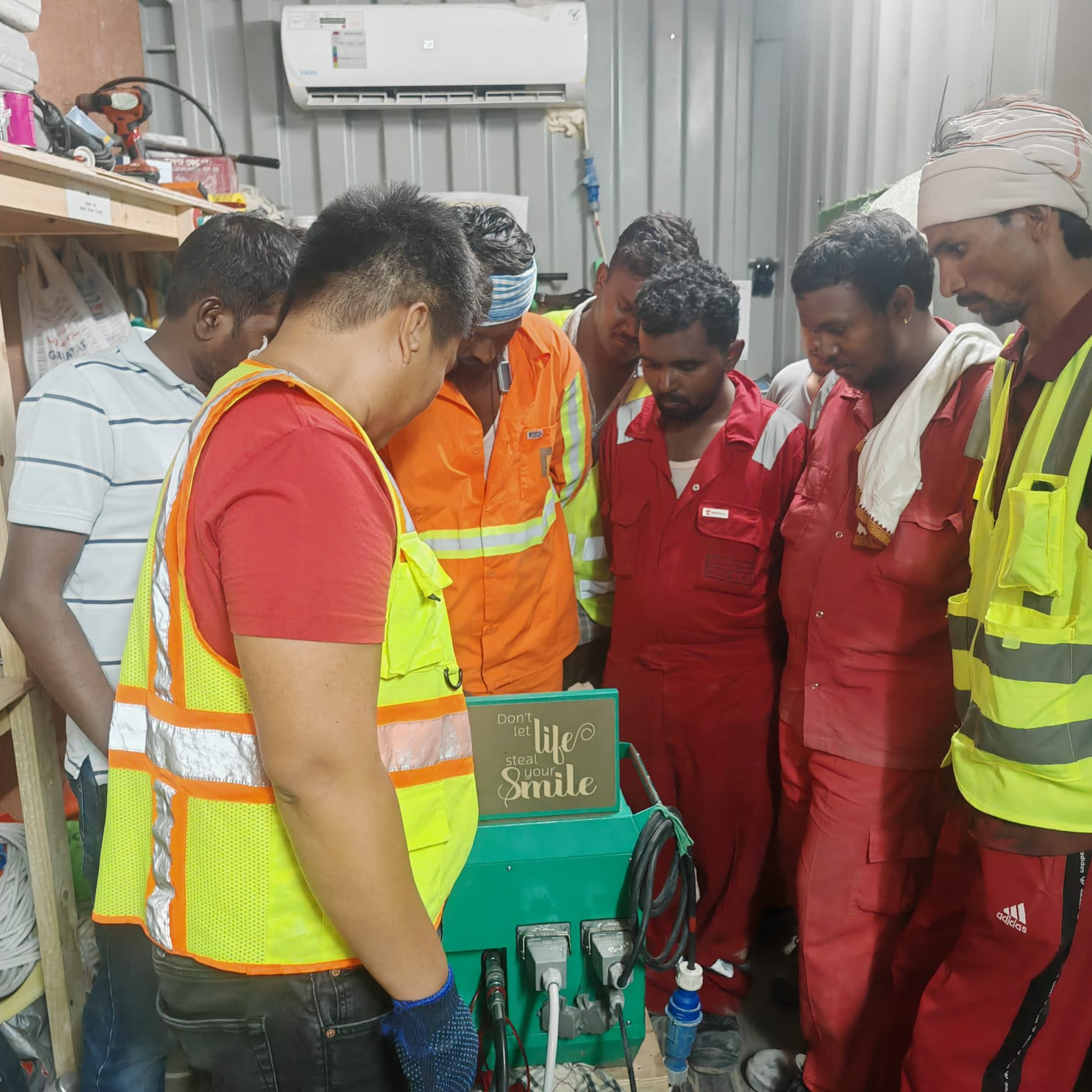
Technician servicing industrial pipe welding equipment.
5. Relief-Valve Setting
The relief valve caps the maximum system pressure and protects the circuit from over-pressurisation. If it is set too low, has a weak or broken spring, or is held open by debris on the seat, the system will vent fluid before it ever reaches the target fusion pressure.
Adjustment is a calibration task, not a guess: follow the manufacturer's procedure and never raise the setting above the machine's rated maximum. Verify the result with a calibrated master gauge, because adjusting against a drifted gauge will simply lock in the error.
Work the sequence, then escalate
If oil level, air bleed, couplers, seals, and the relief valve all check out but pressure still will not hold, the problem is likely deeper in the pump or the control logic. Contact Riyang technical support with your recorded gauge readings and the checks you have already completed, so the diagnosis can continue without repeating steps.
6. Pump Wear and Overheating
A worn pump loses volumetric efficiency: it still spins but moves less fluid, so the carriage slows and the system cannot sustain pressure under load. Listen for abnormal noise and watch for a filter indicator in the red, which means the element is bypassing and sending particles back into the circuit.
Overheating is both a cause and a symptom. Hot oil thins out, internal leakage increases, and pressure falls further. If the reservoir is uncomfortable to touch or the oil smells burnt, stop and let the system cool while you check the suction strainer and cooler for blockage.
7. Gauge or Sensor Drift
Not every pressure loss is real. Analog gauges drift from vibration and pressure spikes, and electronic sensors drift too; a gauge reading low can make a healthy circuit look like it is failing.
Cross-check the machine gauge against a calibrated master gauge or a digital pressure transducer on the same port. If the deviation is meaningful, replace or recalibrate the gauge before changing any hydraulic component. Confirming the reading first prevents you from "fixing" a problem that does not exist.
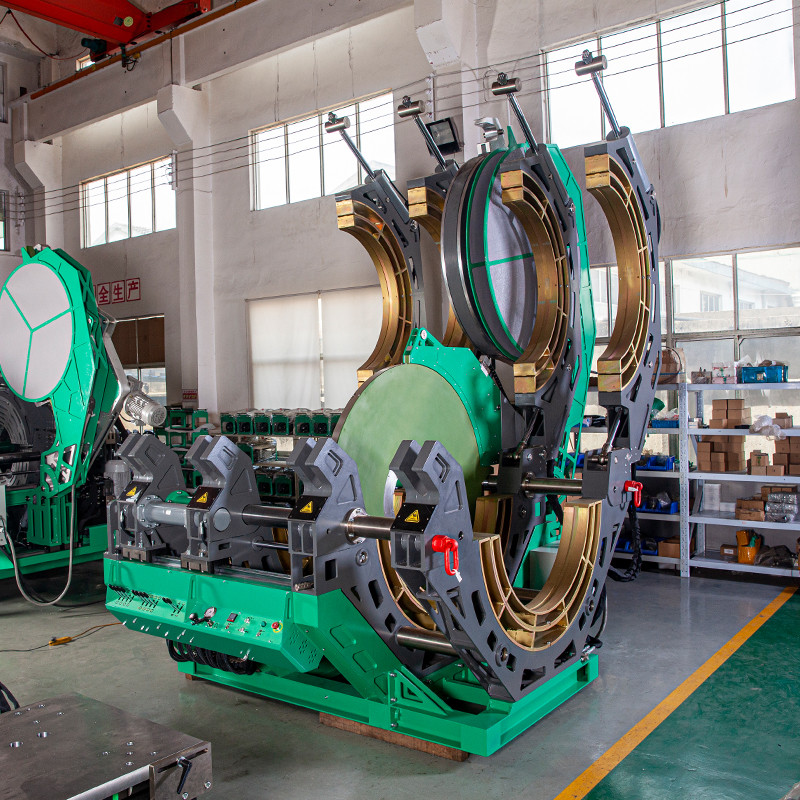
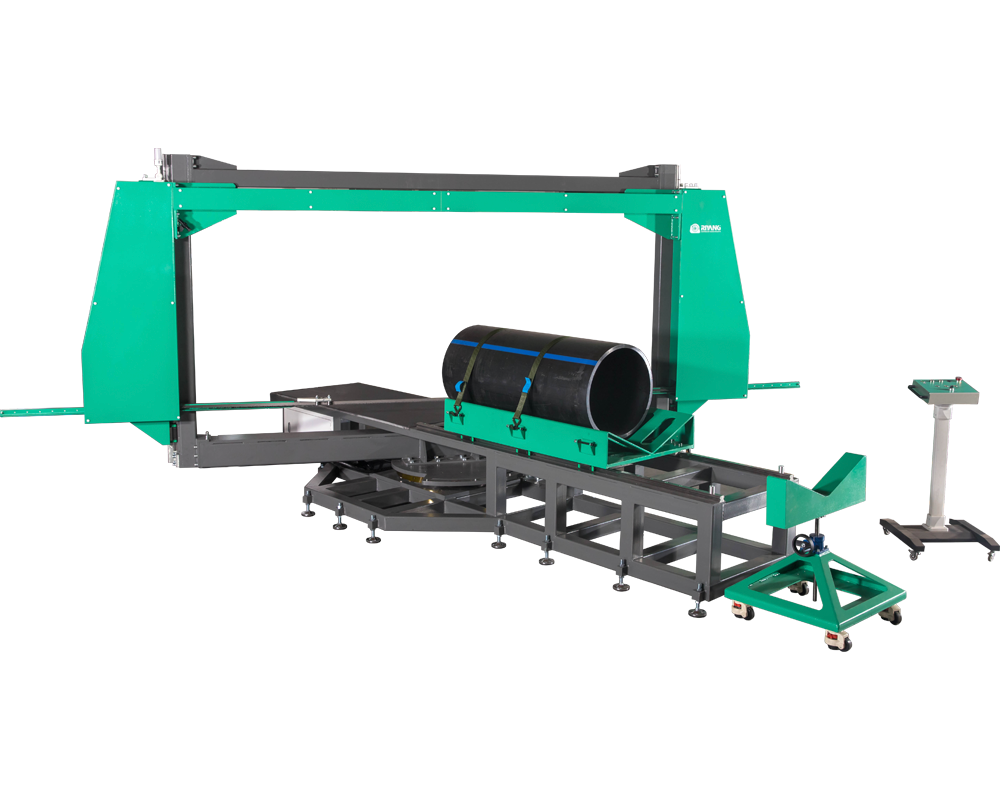
Large-diameter HDPE pipelines where consistent fusion pressure is critical.
8. Excessive Drag Pressure
The carriage must overcome its own friction, so the gauge reading is weld pressure plus the drag pressure needed to move the carriage and pipe. If drag rises from dirty slides, misaligned clamps, or a heavier pipe, the effective weld force drops even though the gauge number looks normal.
Measure drag pressure by moving the carriage at weld speed and reading the gauge, then add that value to the calculated weld pressure. The full relationship is explained in this guide on how to calculate fusion pressure and time, which covers why the gauge target is always weld pressure plus drag, not weld pressure alone.
9. Cold-Weather Viscosity
Cold oil thickens, so at startup the pump struggles to pull fluid, flow drops, and the gauge can fluctuate until the system warms up, especially on machines parked overnight in freezing conditions.
Follow the manufacturer's guidance on oil grade and ambient temperature range, and allow a warm-up cycle before welding. Do not simply increase the relief setting to compensate for cold oil; the correct fix is to bring the fluid to working temperature.
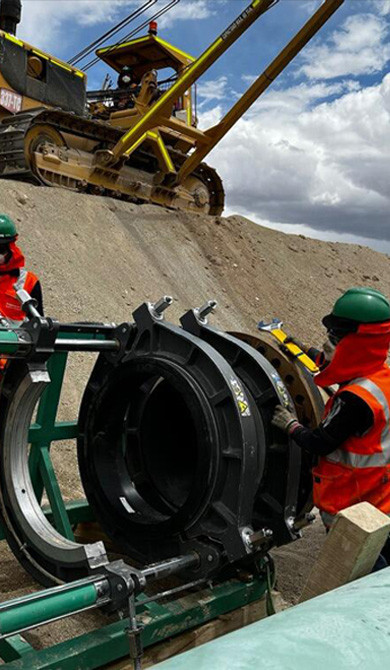
Fabrication work on site, where stable hydraulic pressure keeps the weld cycle consistent.
10. Stop-Work Conditions and Service Escalation
Some symptoms mean stop rather than keep adjusting: external oil spray (a safety hazard), a sudden pressure drop with no carriage movement (internal bypass), a gauge that will not stabilise, or unusual pump noise with a burnt-oil smell. Continuing risks a joint that looks acceptable but was not fused at the correct force.
| Condition | Action |
|---|
| Visible oil spray or jet | Stop, depressurise, repair the leak before restarting |
| Sudden pressure drop with no movement | Stop, isolate cylinder; likely internal bypass |
| Gauge will not stabilise | Stop, cross-check with a master gauge |
| Burnt-oil smell or pump noise | Stop, cool down, inspect suction and cooler |
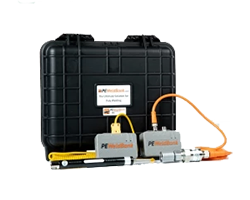
Escalate to an authorised service centre when the fault is inside the power unit or the control system, and keep the data-logger records from the affected welds so the service team can correlate the failure with the reported parameters.
Key Takeaways
- Confirm the reading first: a drifted gauge can mimic a real pressure loss.
- Work from the tank outward: oil level, air, hoses, couplers, seals, relief valve.
- Internal cylinder bypass bleeds pressure with no visible oil leak.
- Drag pressure is added to weld pressure; a rise in drag looks like lost force.
- Cold oil and pump wear both reduce flow and destabilise the gauge.
- Stop work on oil spray, uncontrolled drift, or a gauge that will not settle.
Frequently Asked Questions
Why does my butt fusion machine lose pressure only during the cooling phase?
Cooling requires the joint to stay under fusion pressure for the full hold time, so any small leak becomes obvious then. Check quick-coupler O-rings first; if they are dry, isolate the cylinder to test for internal bypass across the piston seal.
How do I know if air is trapped in the hydraulic circuit?
A fluttering gauge, spongy carriage movement, and a whining pump are the classic signs. Bleed by cycling the cylinder through its full stroke and confirm the reservoir level and suction hose are sound.
Can I keep welding with a slightly drifting pressure gauge?
No. A joint fused at the wrong force can look normal but fail later under load. Confirm whether the drift is in the gauge or the circuit, and correct it before the next weld.
What oil should I use in a butt fusion hydraulic unit?
Use the grade specified in your machine's manual, which is commonly an ISO VG 46 anti-wear hydraulic fluid. The oil grade is a manufacturer recommendation; the fusion procedure itself is governed by the relevant welding standard for your pipe system.
When should I stop welding and call for service?
Stop on any external oil spray, a sudden pressure drop with no carriage movement, a gauge that will not stabilise, or pump noise with a burnt-oil smell. Escalate to an authorised service centre for faults inside the power unit or controls.
References
- ISO 21307 — Plastics pipes and fittings: butt fusion jointing procedures for polyethylene (PE) piping systems.
- DVS 2207-1 — Welding of thermoplastics: heated tool welding of pipes, pipeline components and sheets.
- What Is Butt Fusion — RIYANG.
Still chasing a pressure drop that will not hold? Use this checklist to narrow the fault, and contact Riyang technical support with your recorded readings for help with anything inside the power unit or controls.