

Socket Fusion Machine Guide: Pipe Materials, Size Range, Heating Tools, and Operating Steps
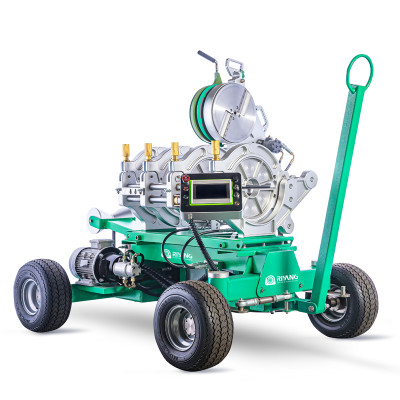
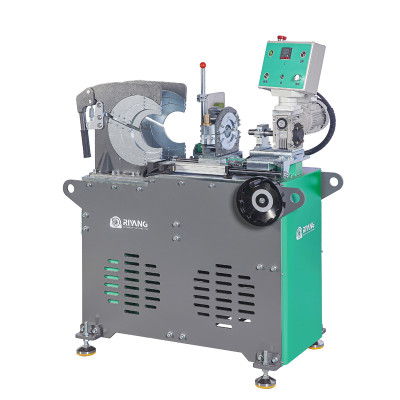
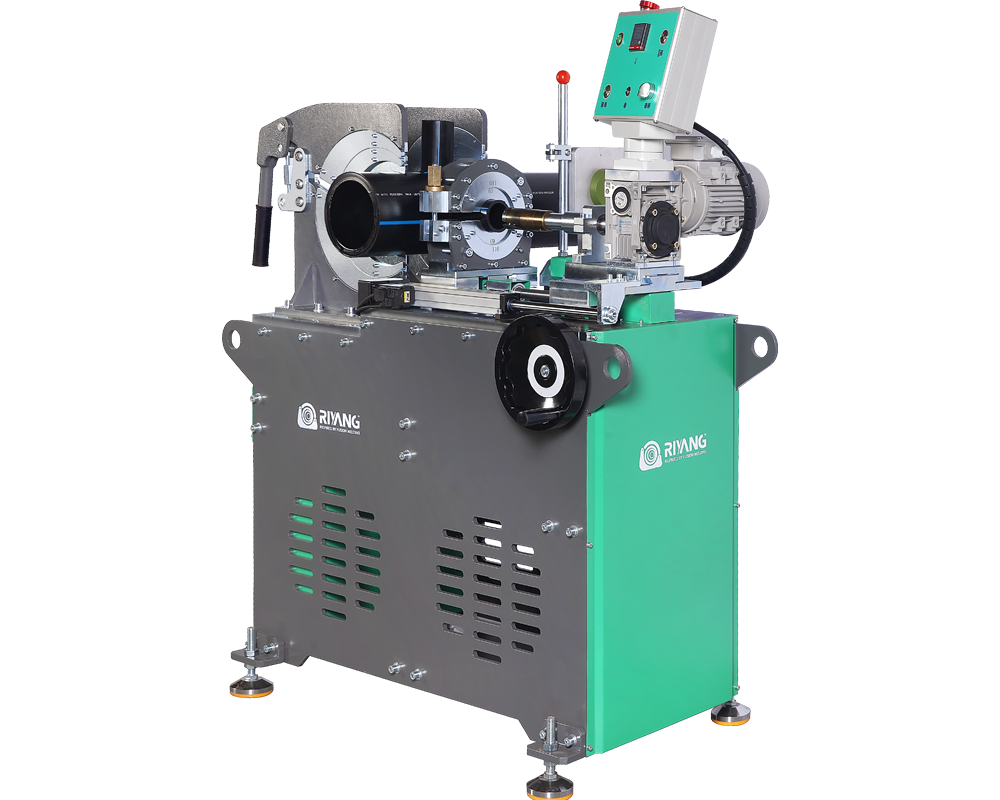
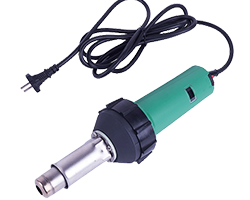
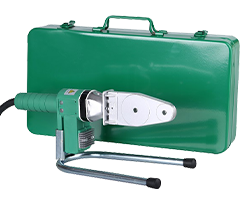
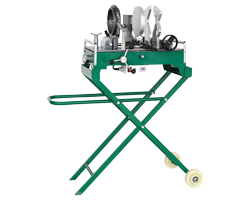
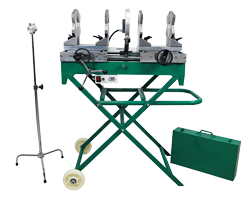
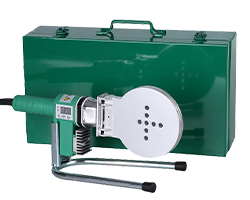
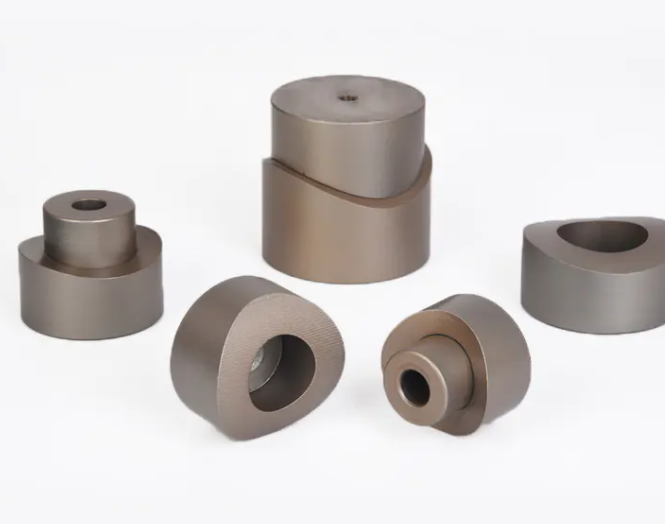
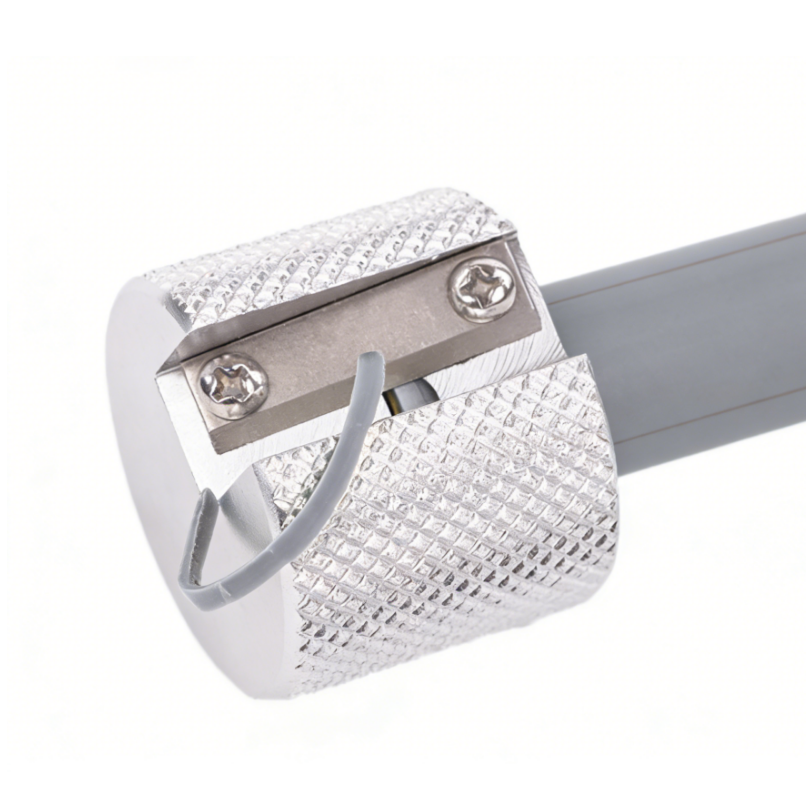
A socket fusion machine joins thermoplastic pipe to fittings by heating the outside of the pipe end and the inside of the fitting socket at the same time, then pushing the two together so the melted surfaces fuse into a single joint. It is the standard method for small-diameter PP-R, PE, PP, PB and PVDF piping in plumbing, building services and process lines. This guide covers materials, size range, heating tools and the step-by-step operating procedure. 1. What Socket Fusion Is and Where It Is Used Socket fusion is a thermal socket-and-spigot joining process. A heated tool carries matched surfaces: a socket that heats the outside diameter of the pipe and a spigot that heats the inside of the fitting socket. Both surfaces reach welding temperature at the same time, then the pipe is pushed into the fitting to a marked depth and held motionless while the joint cools and solidifies. It is most common where pipe diameters are small enough to be handled by a hand-held or bench tool, typically from around 20 mm up to about 110–160 mm depending on the machine. Typical applications include: Because it needs no electrofusion couplers, no clamping frame and no generator, socket fusion is a low-cost, portable joining method that suits site installation and workshop prefabrication alike. A socket fusion machine can join several thermoplastic families, but the procedure — temperature, heating time and cooling time — is set for each material and, crucially, for each fitting manufacturer. Never assume one setting works across materials. PP-R (polypropylene random copolymer) is the most common material for domestic and building-services plumbing. Typical socket welding temperature is around 260 °C. PE (polyethylene, PE80 or PE100) is used for water and gas distribution. Socket fusion is generally limited to smaller diameters; larger PE is more often butt-fused or electrofused. PP (polypropylene homopolymer or copolymer) appears in industrial, ventilation and drainage systems. PB (polybutylene) is a flexible polymer used in some plumbing and heating circuits. PVDF (polyvinylidene fluoride) offers high chemical resistance and a higher melt temperature, and is used in chemical, laboratory and high-purity lines. Two rules apply across all materials. First, the pipe and the fitting must be from the same polymer family; mixing materials produces a joint that may not fuse reliably. Second, the machine temperature and the heating and cooling times must follow the applicable standard and the pipe and fitting manufacturer’s instructions. Where a standard specifies a mandatory value, that value takes priority; where it does not, machine and fitting settings are manufacturer recommendations rather than universal constants. Socket fusion tools divide into two broad forms. Hand-held socket welders are compact heating plates with interchangeable sockets and spigots. They run on single-phase power, weigh little, and are ideal for on-site work and small diameters, commonly up to about 32–63 mm. The operator holds the tool and pushes the pipe and fitting onto the heated surfaces by hand. Bench or stand machines use a larger heating plate, higher power, and a stand or clamps to hold the pipe and fitting during heating and cooling. They cover larger diameters, typically up to about 110–160 mm, and support higher-volume prefabrication where repeatability matters more. The heating surfaces are the heart of the machine. Each pipe size uses a matched pair: a socket (female) that heats the pipe outside diameter, and a spigot (male) that heats the fitting socket inside diameter. The surfaces are normally PTFE or PTFE-coated so that molten material does not stick. Keep the surfaces clean and free of burnt residue before every session. Change socket and spigot sizes according to the machine’s procedure — on many tools this is done with the plate cold or at a reduced temperature, using the correct spanner or fixture. A worn, scratched or contaminated coating transfers heat unevenly and can mar the pipe surface, so inspect the coating regularly. Temperature control is what separates a good joint from a weak one. Most socket fusion machines maintain a set temperature on the heating plate. Typical values are around 260 °C for PP-R and PE; PVDF requires a higher set point. Always confirm the required temperature from the fitting manufacturer’s procedure rather than relying on a general number. Machines differ in how they control temperature. Digital socket fusion tools hold a set point with a controller and show the current temperature on a display, which helps consistent production. Analog tools use a thermostat and an indicator lamp that shows when the plate is at temperature. Whichever type you use, allow the machine to complete its warm-up and stabilise before the first weld. A plate that has not fully heated will produce a cold, weak joint. Verify the surface temperature with a suitable contact thermometer or temperature probe as part of routine checks, following the machine’s calibration guidance. Preparation determines joint quality. Cut the pipe square using a proper pipe cutter or fine-tooth saw; an angled cut reduces the contact area inside the fitting. Remove swarf and any burr, and make sure the surfaces are dry and free of dirt, grease and moisture. Mark the insertion depth on the pipe before heating. The mark corresponds to the socket depth of the fitting for that size and material, as given by the fitting manufacturer. The mark has two jobs: it shows how far the pipe must be pushed, and it lets you confirm visually that full insertion has been reached. Without it, over-insertion or under-insertion is easy to miss. The socket fusion cycle has four stages: heat, changeover, insert and cool. Comparing portable and bench options? Browse the Riyang socket fusion machine range, from compact hand-held tools to 160 mm machines. View socket fusion machines Most socket fusion failures trace back to a small number of repeatable mistakes: Choose a socket fusion machine by the largest diameter you expect to weld and the workload you expect to run. Diameter: match the machine’s maximum size to your largest pipe. A hand-held tool suits up to about 63 mm; bench machines reach roughly 160 mm. Materials: confirm that the tool and its heating surfaces cover your material — PP-R, PE, PP, PB or PVDF — and the required temperature range. Control: a digital display is worth the extra cost when consistency and record-keeping matter; analog is adequate for light or occasional work. Power supply: check that the machine matches the site supply, for example 110 V or 230 V single-phase. Workload: occasional repair suits a portable tool; daily prefabrication favours a bench machine with a stand and clamps. Before you buy, confirm the following: What temperature does a socket fusion machine use? Many PP-R and PE procedures use around 260 °C, while PVDF is higher. Always follow the fitting manufacturer’s specified temperature for the material and size. Can one machine weld both PP-R and PE? Yes, if the machine covers the diameter and temperature range, but use the correct sockets and spigots and apply the specific heating and cooling times for each material. Do I need a digital or an analog machine? A digital tool holds the set point and shows temperature, which suits consistent production; an analog tool is fine for smaller, occasional jobs if the thermostat is reliable. What pipe sizes can socket fusion handle? Hand-held tools commonly cover up to about 110 mm, while bench machines extend to roughly 160 mm. Confirm the exact range for your machine. Can I rotate the pipe while inserting it? No. Insert in one straight, axial motion without rotation; twisting shears the melted surface and weakens the joint. How long must the joint cool? Cooling time depends on material and diameter and is set by the fitting manufacturer. Hold the joint still until the full cooling time has elapsed. If you need complete welding table for various diameter of PP-R pipes, please reach out to Riyang sales team. Riyang — Socket Fusion Machines (riyang-welding.com). Riyang — Contact Us (riyang-welding.com). UPG Pipe Systems — Socket Fusion Welders (upg.nz). For help matching a socket fusion machine to your pipe range, talk to the Riyang team. Contact Riyang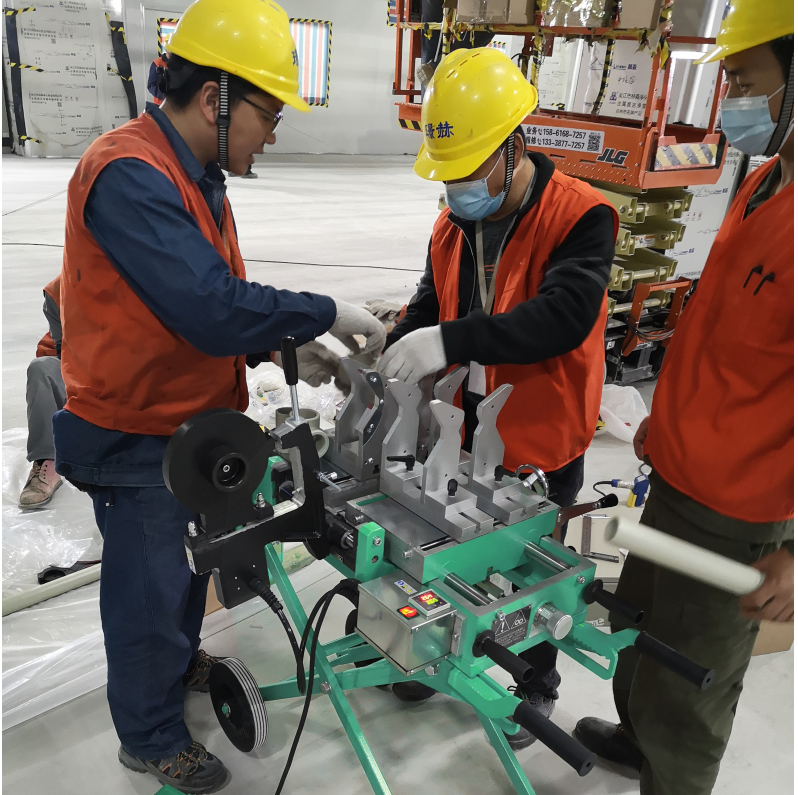
2. Compatible PP-R, PE, PP, PB and PVDF Systems
3. Hand-Held vs Bench and Stand Machines
Factor Hand-held welder Bench / stand machine Typical diameter range About 20–63 mm About 63–160 mm Power Single-phase, lower wattage Single-phase, higher wattage Portability High Low to medium Output / workload Low to medium Medium to high Setup and changeover Fast Longer but more repeatable 4. Heating Sockets and Spigots
5. Temperature Control and Warm-Up
6. Pipe Cutting, Marking and Insertion Depth
7. Heating, Changeover and Cooling Steps
8. Common Errors: Rotation, Over-Insertion and Contamination
9. Machine Selection by Diameter and Workload
Frequently Asked Questions
Key Takeaways
References