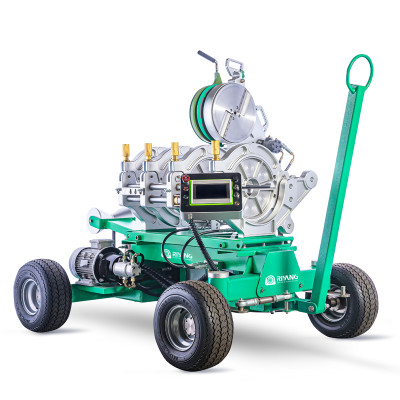


How an HDPE Pipe Band Saw Prepares Accurate Angles for Elbows, Tees, Crosses, and Wyes
An HDPE pipe band saw cuts thermoplastic pipe at controlled angles—typically from −45° to 67.5°—to produce the accurately angled segments that a fitting fabrication machine then fusion-welds into elbows, tees, crosses, and wyes. Accurate miter cuts, often at 11.25°, 15°, 22.5°, or 45°, keep weld faces aligned and reduce rework. This guide covers angle geometry, clamping, blade and feed control, material handling, and saw-to-fabricator matching.
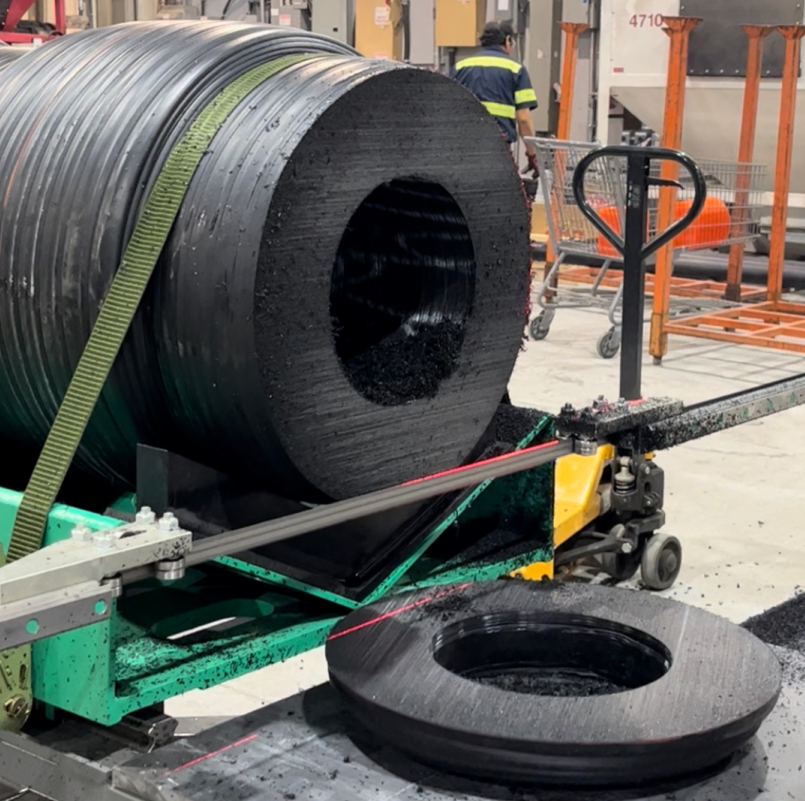
Why Fitting Fabrication Begins with Accurate Cuts
Fabricated thermoplastic fittings are not molded as single pieces. An elbow, tee, cross, or wye is built by cutting straight pipe into segments at specific angles, then butt-fusing those segments together on a fitting fabrication machine. The saw cut is the first precision step in that chain, and every downstream stage inherits its accuracy.
If a cut is off-angle, the two weld faces will not sit flush. The fusion bead forms unevenly, the fitting's included angle drifts from its nominal value, and the finished fitting may fail dimensional inspection or require rework. A rough or torn cut face has the same effect, because surface contact between the pipe ends is what allows a consistent bead to form during heating and fusion.
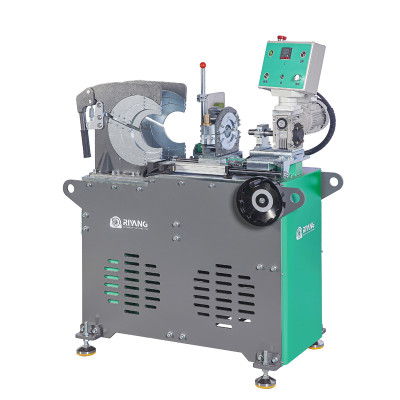
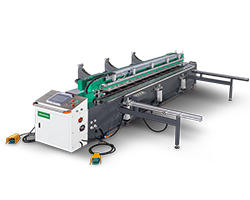
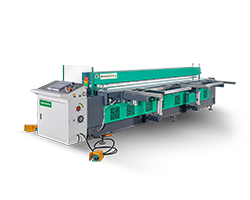
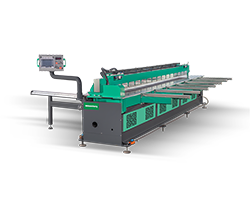
For this reason, a dedicated Riyang pipe band saw is treated as preparation equipment for the welding stage rather than a general-purpose cutting tool. The cleaner and more accurate the cut, the less facing and correction the fabrication machine has to absorb.
Angle Ranges and Segmented Elbow Geometry
A segmented (mitered) elbow is produced by joining several short pipe segments, each cut so that the cumulative turn equals the required elbow angle. The miter cut angle on each pipe end follows a simple relationship: divide the total elbow angle by twice the number of joints. In formula form, the cut angle equals the elbow angle divided by 2 × (number of segments − 1).
For a 90° elbow built from three segments (two joints), each pipe end is cut at 22.5°. A four-segment 90° elbow uses 15° cuts. A 45° elbow built from two segments uses 22.5° cuts. These are geometric relationships, not a mandated standard—the standards that apply to the finished joint (such as ISO 21307 or ASTM F2620 for butt fusion) govern the welding process and joint quality rather than the miter geometry itself.
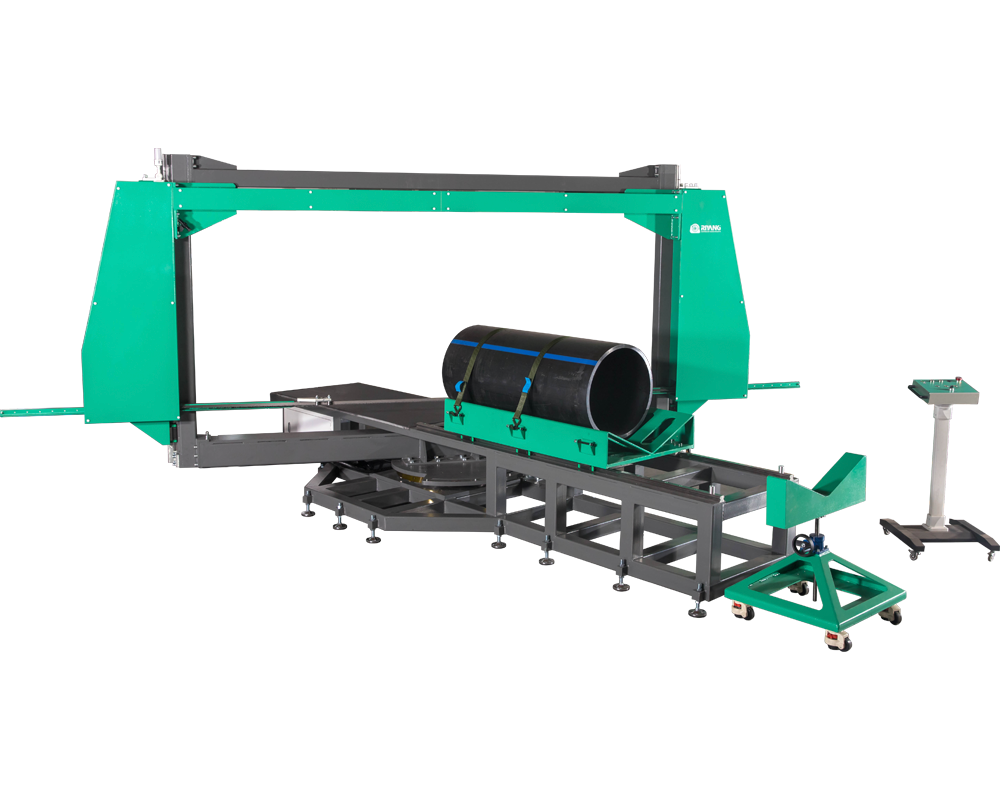
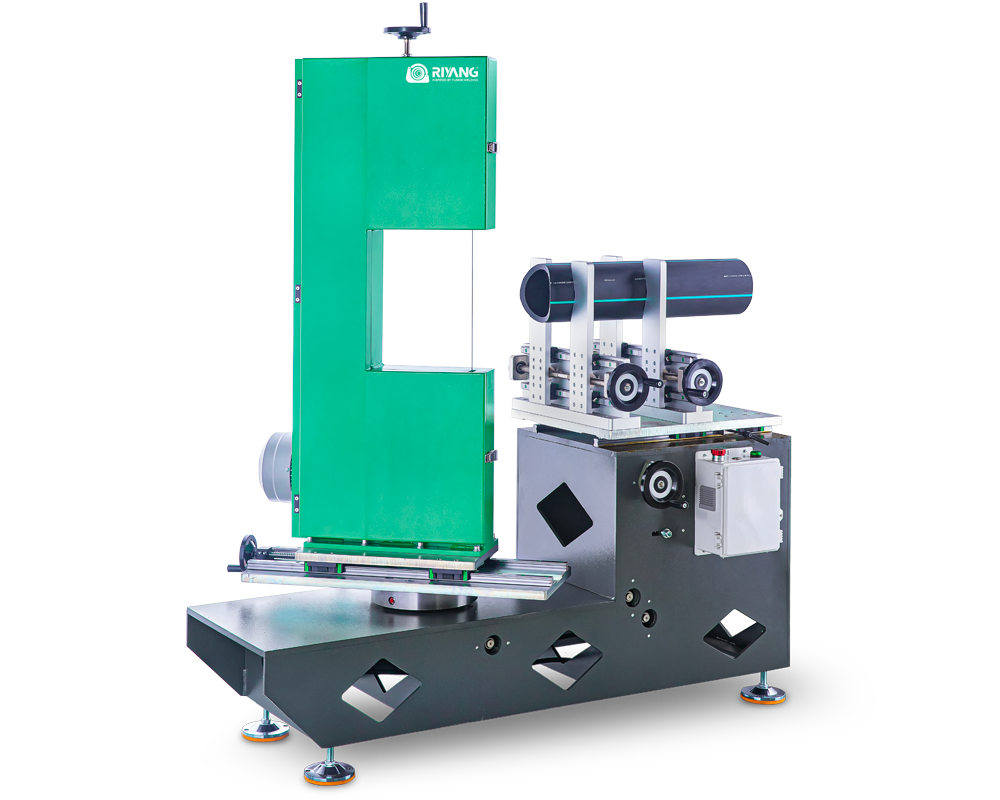
Riyang TPS series band saws index the cutting angle from −45° to 67.5° by rotating the saw housing, without repositioning the pipe. That sweep covers the standard fabrication angles—11.25°, 15°, 22.5°, 30°, 45°, 60°, and 67.5°—so a single clamping setup can produce every segment a typical elbow or wye layout requires.
Cutting for Tees, Crosses, and Wyes
Tees and crosses are the most forgiving to cut. The branch pipe is cut square (90° to the pipe axis) and then fused to an opening on the run. What matters here is a clean, square end face so the branch seats flush against the run with even contact around the full circumference.
Wyes (laterals) are more demanding. The branch leaves the run at an angle—commonly 45° or 60°—so the branch end is cut at that angle and the run is prepared with a matching saddle opening. The band saw's ability to swing to 45°, 60°, and 67.5° is what makes wye fabrication practical on the same machine, and it is the reason the full −45° to 67.5° range is emphasized for wye joints in particular.
In every case, the saw's role is to deliver a predictable, repeatable angle. When several segments must be identical, a machine that re-indexes reliably beats hand marking, because a small angular error repeats and compounds across a multi-segment fitting.
Stable Clamping and Pipe Ovality
A pipe that moves during the cut produces a curved or stepped face, so clamping stability is as important as blade angle. Large-diameter HDPE pipe is rarely perfectly round; some ovality is normal from manufacturing, storage, and transport. The clamp must hold the pipe firmly enough to prevent movement without crushing or distorting the wall.
Riyang TPS saws use heavy-duty tie-down straps to secure the pipe, supported by a pipe supporting bed. This is a manufacturer design choice rather than a code requirement. Ovality limits themselves are a separate matter: relevant pipe specifications and the fusion standard being applied set allowable ovality and may require re-rounding before welding, which is a mandatory control where it applies.
Before cutting a batch, check that the pipe is seated fully in the support bed, that the straps are tensioned evenly, and that the cut line is square to the blade plane. Re-clamping mid-run is slower than the cutting itself, so a stable first setup is worth the extra seconds.
Blade Guide, Feed Rate, and a Clean Cut Face
A band saw's cut quality comes from three interacting controls: blade guide alignment, blade tension, and feed rate. Misaligned guides let the blade wander and cut a tapered or wavy face. Low tension lets the blade deflect under load. An unsuitable tooth pitch for the wall thickness either loads the gullets and stalls the cut or tears the surface.
Feed rate is where most cut defects originate. Feed too fast and the blade loads up, the cut face roughens, and the material can overheat. Feed too slow and friction builds heat without cutting. Riyang TPS saws provide electrically driven, adjustable feeding speed so the operator can set the rate to the material and wall thickness, with a stated line speed up to 255 m/min on the TPS1000. A laser cut detection line and an automatic stop if the blade breaks are additional controls on the saw.
A clean cut face reduces—but does not eliminate—the preparation needed before fusion. The cut face must still be clean, dry, and free of oxidation film in line with the fusion standard being followed. A saw that produces a smooth face simply means the facing operation is faster and more consistent.
Material Considerations: HDPE, PP, and PVDF
These saws are rated for several thermoplastics, and each cuts a little differently. Matching the blade and feed rate to the material prevents melted faces, gummed teeth, and premature blade wear.
| Material | Typical Behavior | Cutting Note |
|---|---|---|
| HDPE | Tough and ductile; wide wall-thickness range | Produces chip/ribbon; thick walls benefit from a dedicated thick-wall blade |
| PP | Similar processing to HDPE but softer at the cut | Keep feed moderate to avoid gumming the teeth |
| PVDF | Stiff fluoropolymer with high dimensional stability | Cuts cleanly; avoid overheating the face |
Riyang lists HDPE, PP, PVDF, and PPR as the supported materials for the TPS range, and offers a special saw blade for thick-walled pipe. Blade selection and feed settings are manufacturer recommendations rather than mandatory values, but they directly determine whether the cut face is usable for fusion.
Minimizing Waste and Marking Segments
Segmented fittings consume pipe, and the difference between a tidy layout and a casual one shows up as offcut waste. Before cutting, mark every segment on the pipe OD and account for the blade kerf—the material removed by the cut itself—so segments do not come up short.
Plan the segment sequence to extract the most segments from a length, staggering cut lines so short drops are minimized. Where a fitting needs several identical segments, cut them consecutively from one setup rather than resetting the angle between pieces. The laser cut detection line on a TPS saw gives the operator a visual reference to align the marked line with the blade before the cut begins.
Waste reduction is a working practice, not a standard, but it is one of the fastest ways to lower the material cost per fitting in a fabrication shop.
Matching Saw Capacity to the Fabrication Machine
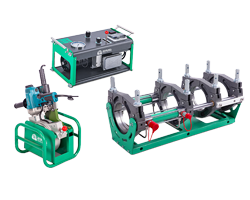
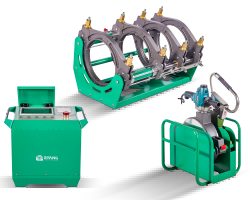
A band saw should be sized to the fabrication machine it feeds. The saw's OD range must cover the pipe sizes the fabrication machine will weld: its maximum OD must be at least the largest pipe you cut, and its minimum OD no greater than the smallest. Riyang's own guidance is to purchase a dedicated saw together with the fitting fabrication machine, rather than relying on manual cutting tools.
| Saw Model | Cutting Range (OD) | IPS Equivalent |
|---|---|---|
| TPS400 | 90–400 mm | 3–16 IPS |
| TPS450 | 90–450 mm | 3–18 IPS |
| TPS630 | 200–630 mm | 8–24 IPS |
| TPS800 | 200–800 mm | 8–32 IPS |
| TPS1000 | 315–1000 mm | 12–42 IPS |
| TPS1200 | 315–1200 mm | 12–48 IPS |
As a general alignment, a saw is matched to a fabrication machine of similar OD capacity, so the segments the saw produces fit the clamps and weld faces of the fabricator. The precise pairing is a manufacturer recommendation, not a mandatory rule.
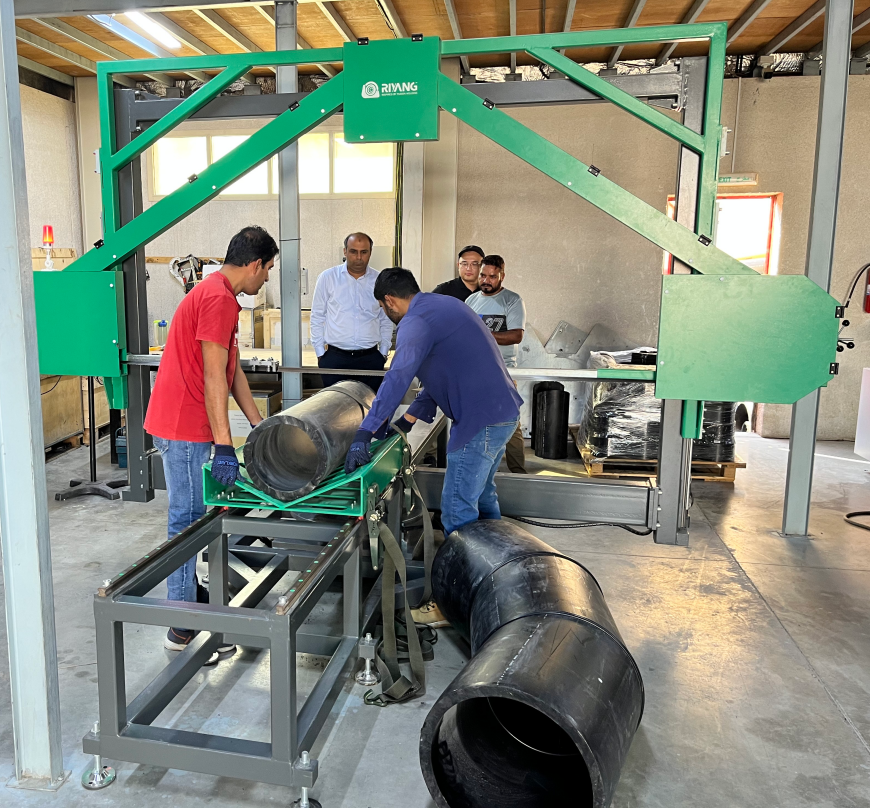
To compare the full TPS range and confirm the model that fits your pipe sizes, review the Riyang pipe band saw series.
Safety and Maintenance Checklist
Safe operation follows the machine manual plus the workplace safety rules that apply on your site; the maintenance intervals below are manufacturer recommendations rather than code requirements.
- Keep hands and loose clothing clear of the blade path, and use the remote control panel to stand clear of the cutting area.
- Verify the emergency stop and the saw-blade break detection work before each shift.
- Inspect blade tension, guides, and tooth condition before starting a batch.
- Confirm the laser cut detection line aligns with the marked cut before each cut.
- Check clamping straps for wear and replace frayed straps before they fail.
- Clear chips and offcuts from the work area and blade path regularly.
- Clean the blade and guides to prevent plastic buildup from loading the teeth.
- Follow lockout/tagout procedures before any blade change or service.
- Keep the electric-cylinder drive and saw carriage clean; the all-electric design of the TPS range removes the hydraulic oil servicing that a hydraulic saw would require.
Frequently Asked Questions
What angle range does an HDPE pipe band saw cut?
The Riyang TPS series indexes from −45° to 67.5°, covering the standard fitting fabrication angles such as 11.25°, 15°, 22.5°, 30°, 45°, 60°, and 67.5° without repositioning the pipe.
What pipe sizes can a pipe band saw handle?
It depends on the model. The TPS range spans 90–400 mm on the TPS400 up to 315–1200 mm on the TPS1200. Choose the model whose OD range covers the pipes your fabrication machine welds.
Do I need a band saw if I already have a fitting fabrication machine?
Riyang recommends a dedicated saw alongside the fabrication machine. Manual cutting is slower and less consistent, and inaccurate segment angles carry through into the finished fitting.
What materials can these saws cut?
The TPS series is rated for HDPE, PP, PVDF, PPR, and PVC. Blade and feed settings are adjusted to suit each material.
What miter angle do I cut for a segmented 90° elbow?
It depends on the segment count. A three-segment 90° elbow uses 22.5° cuts; a four-segment elbow uses 15° cuts. The cut angle equals the elbow angle divided by 2 × (number of segments − 1).
Is the cut face ready to weld immediately?
Not by itself. The face must still be clean, dry, and free of oxidation film before fusion, in line with the fusion standard being applied. The saw's job is to deliver an accurate, smooth face that makes that preparation faster.
Key Takeaways
The band saw is the precision preparation step for segmented fitting fabrication, not a general cutting tool.
Miter cut angle equals the elbow angle divided by 2 × (number of segments − 1).
Clamping stability and a correct feed rate determine cut-face quality more than the blade alone.
Match the saw's OD capacity to the fabrication machine it feeds.
The TPS range cuts HDPE, PP, PVDF and PPR from 90 mm up to 3000 mm.
Ready to match a saw to your fabrication line? Compare the Riyang TPS pipe band saw range and contact the team for a sizing recommendation.
References
- Riyang — Pipe Band Saws: https://www.riyang-welding.com/products2115524/Pipe-Band-Saws.htm
- Riyang — Pipe Band Saw TPS1000 (315–1000 mm, 12–42 IPS): https://www.riyang-welding.com/pid18504122/Pipe-Band-Saw-TPS1000-315MM-1000MM-12-IPS-42-IPS.htm
- Riyang — Fitting Fabrication Machines: https://www.riyang-welding.com/products2115521/Fitting-Fabrication-Machines.htm