

How Pipe Roller Supports and Alignment Tools Reduce Drag Pressure and Improve Butt Fusion
Pipe roller supports and alignment tools reduce drag pressure in butt fusion by carrying the pipe on low-friction rollers at a consistent height, so the fusion carriage moves the pipe freely instead of dragging it across the ground. Lower, more stable drag pressure keeps pipe ends concentric and produces a uniform weld bead. This article explains how drag pressure arises and how proper support and alignment improve weld quality.
What Drag Pressure Is and Why It Changes
Drag pressure is the hydraulic force required to overcome the resistance of moving the pipe and machine carriage along the pipe axis. In a butt fusion cycle the machine first pushes the pipe ends against the heater plate to build a bead, holds them in contact during heat soak, then presses the molten ends together to form the joint. Every one of these stages depends on the carriage moving smoothly and predictably.
Drag pressure is not a fixed number. It changes with the total weight of the pipe, the friction between the pipe and the ground or supports, the length of the pipe string, and the condition of the carriage and rollers. In fusion pressure calculations such as those based on ISO 21307:2017, drag pressure is measured separately and added to the gauge pressure that delivers the required interfacial pressure. If drag pressure is read too high, the joint receives too much force; if it is read too low, the joint receives too little. Both errors degrade weld quality, so operators measure it carefully rather than guessing. Riyang's guide on how to calculate fusion pressure and time of butt fusion machines walks through the gauge pressure formula and how drag pressure fits into it.
Pipe Weight, Ground Friction, and Long Pipe Strings
HDPE pipe is heavy on a per-metre basis, and the weight rises quickly as diameter and wall thickness increase. A long string of joined sticks multiplies both the moving mass and the contact area with whatever surface supports it. When a pipe rests directly on sand, gravel, soil, or asphalt, that large contact area generates high sliding friction, and the fusion carriage has to pull the entire string through it.
The result is a high and often unstable drag pressure reading. An operator who compensates with a large drag-pressure allowance may over-pressurise the joint, while an unstable reading can shift between the heat-soak and fusion stages and disturb the molten interface. Lifting the pipe onto roller supports removes most of that sliding friction and replaces it with the low rolling resistance of a roller, which is the single most effective way to bring drag pressure down to a predictable value.
Roller Spacing and Load Capacity
Roller supports only work well when they are spaced and sized correctly. If the rollers are too far apart, the pipe sags between them, which reintroduces a vertical offset and makes the string harder to move. If the rollers are undersized, they flex or bind under load and the friction returns. Spacing should be close enough to keep sag small, with closer intervals for larger, thinner-walled, or more flexible pipe that deflects more between supports.
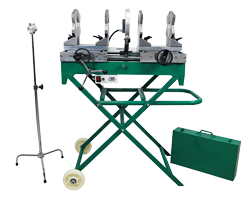
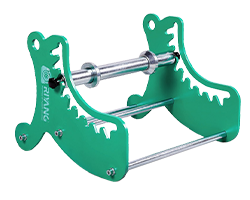
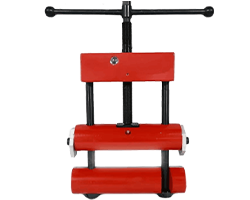
Each roller stand must also be rated to carry its share of the pipe weight. On a long string, the load is distributed across several stands, so the heaviest single span rather than the whole string usually governs the required capacity. Roller stands that use a free-turning roller rather than a fixed saddle reduce friction and make height adjustment easier. Riyang's DOLPHIN 355 and MAMBA 630 pipe roller supports are built specifically for supporting pipe during butt fusion and for reducing dragging pressure on the job site.
Mid-project tip: set the rollers first, then bring the machine carriage to them. Adjusting the machine to a misaligned roller string is harder than levelling a few stands on a reference line, and it transfers the error into the weld.
Aligning Pipe Centerlines Before Facing
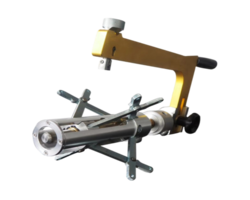
Before the facing tool cuts the pipe ends, both pipes must share the same centerline. The fusion machine's clamps hold and centre the pipe at the joint, but the external roller stands establish the initial height and lateral position of the string before it enters the clamps. If the rollers leave one end high or offset to one side, the clamps have to force the pipe back into line, which stresses the pipe and can leave the ends mismatched at the joint.
Height-adjustable roller stands let the operator match the roller height to the machine clamp height. A string line or laser run along the top of the pipe is a practical way to confirm the string is straight and level before facing begins. Correct centerline alignment is what allows the facing tool to produce flat, parallel pipe ends and what keeps the final bead even around the full circumference.
Reducing Hydraulic Demand and Carriage Instability
Every bar of drag pressure the carriage has to overcome is a bar of extra demand on the hydraulic system. When a machine runs close to its pressure ceiling just to move the pipe, it has less stable control during the precision stages of the cycle, and the carriage can jerk or rock as it overcomes stick-slip friction. That instability can disturb the molten bead and produce an asymmetric or uneven joint.
On well-supported pipe, the carriage glides with minimal effort, the hydraulic system works in a comfortable range, and the pressure readings stay steady through heat soak and fusion. The operator gets a cleaner pressure trace, which also makes the data log easier to interpret for quality records.
Preventing Pipe-End Misalignment and Ovality
A long unsupported string does more than drag; it can sag enough to ovalise the pipe end. Ovality makes the facing cut uneven and prevents the two pipe ends from matching, which is a common cause of a weak or rejected joint. It can also happen when pipe is stored or stacked poorly before welding, but during the weld itself the supports are the main line of defence.
Roller supports hold the pipe round and level as it approaches the machine, which helps the clamps grip a true circle instead of a distorted one. Before every weld, operators should still check the pipe ends for ovality and re-round or trim as needed, because no roller stand can correct a pipe that is already permanently deformed.
Setup for Large-Diameter and Long Pipeline Projects
Large-diameter work, roughly 630 mm and above, and long pipeline strings put the most stress on both the supports and the machine. The heavier pipe needs more stands with higher load capacity, placed on a common reference line so the entire string stays level. The spacing may need to be tightened near the fusion joint so the machine sees a short, stable span right where accuracy matters most.
On trailer and tracked jobsites the support line is often set up and re-set as the crew moves along the trench. Using roller stands that are quick to level and lock keeps that re-set time short and reduces the temptation to skip a stand. A consistent support line is one of the cheaper ways to protect weld consistency on a long run, because it removes a variable that would otherwise change from joint to joint.
Roller and Alignment-Tool Selection Checklist
Use the checklist below when specifying or setting up roller supports and alignment tools for a butt fusion job.
- Confirm each stand's load rating covers its share of the heaviest pipe span.
- Place rollers close enough to prevent visible sag between supports.
- Set all rollers to match the machine clamp height on a common reference line.
- Verify the pipe string is straight and level before facing.
- Check pipe ends for ovality and re-round before clamping.
- Measure drag pressure with the pipe moving and record it for the pressure calculation.
| Condition | Unsupported pipe | Pipe on roller supports |
|---|---|---|
| Drag pressure | High and unstable from sliding friction | Low and steady from rolling contact |
| Bead symmetry | Risk of uneven or asymmetric bead | More uniform bead around the joint |
| Centerline alignment | Harder to hold straight and level | Easier to align with machine clamps |
| Hydraulic demand | Higher, with stick-slip movement | Lower, with smoother carriage travel |
| Ovality risk at pipe end | Higher from sag | Lower with continuous support |
Frequently Asked Questions
What is drag pressure in butt fusion?
Drag pressure is the hydraulic force needed to move the pipe and carriage along the pipe axis against friction. It is measured separately and added to the calculated gauge pressure so the joint receives the correct interfacial pressure.
Do I need roller supports for every butt fusion job?
For short, light pipe on a clean surface a single stand near each end may be enough, but any job with heavy pipe, long strings, or rough ground benefits from proper roller supports. The heavier and longer the pipe, the more important the supports become.
How many roller stands should I use?
There is no single number; spacing depends on pipe diameter, wall thickness, and stiffness. The practical rule is to use enough stands, spaced closely enough, that the pipe does not visibly sag between them and each stand stays within its load rating.
Can roller supports fix an oval pipe end?
No. Roller supports hold a sound pipe round and level, but they cannot correct a pipe that is already permanently deformed. Check for ovality before welding and re-round or trim the end as required.
What is the difference between a roller support and a fixed saddle?
A roller support uses a free-turning roller that lowers friction and allows the pipe to move during the fusion cycle. A fixed saddle holds the pipe in place but adds more resistance to movement, which can raise drag pressure.
Key Takeaways
- Drag pressure is the moving resistance added to gauge pressure in fusion pressure calculations, and it must be measured, not guessed.
- Lifting pipe onto roller supports converts sliding friction into low rolling resistance and stabilises drag pressure.
- Spacing and load capacity decide whether the rollers actually work; both must match the pipe being welded.
- Correct centerline alignment before facing is what produces flat ends and an even bead.
- Well-supported pipe reduces hydraulic demand, carriage instability, and ovality risk at the joint.
Choosing the right pipe roller supports and alignment tools is a low-cost way to remove a major source of weld variability. Review Riyang's DOLPHIN 355 and MAMBA 630 pipe roller supports and match them to your pipe range before your next long-string or large-diameter fusion job.